Multi-Path Communication for a Military Reconnaissance Robot
When a ground robot operates in a warzone, underground tunnel, or disaster zone, a single communication
link is not enough. We developed a hybrid communication subsystem that combines 5G, MANET mesh,
satellite, and SDR into one resilient multi-path architecture — as part of a government-funded
consortium with T-Mobile, Brno University of Technology, and LTR.
Funded by Technology Agency of the Czech Republic (TAČR) · Programme TREND · Project FW08010050
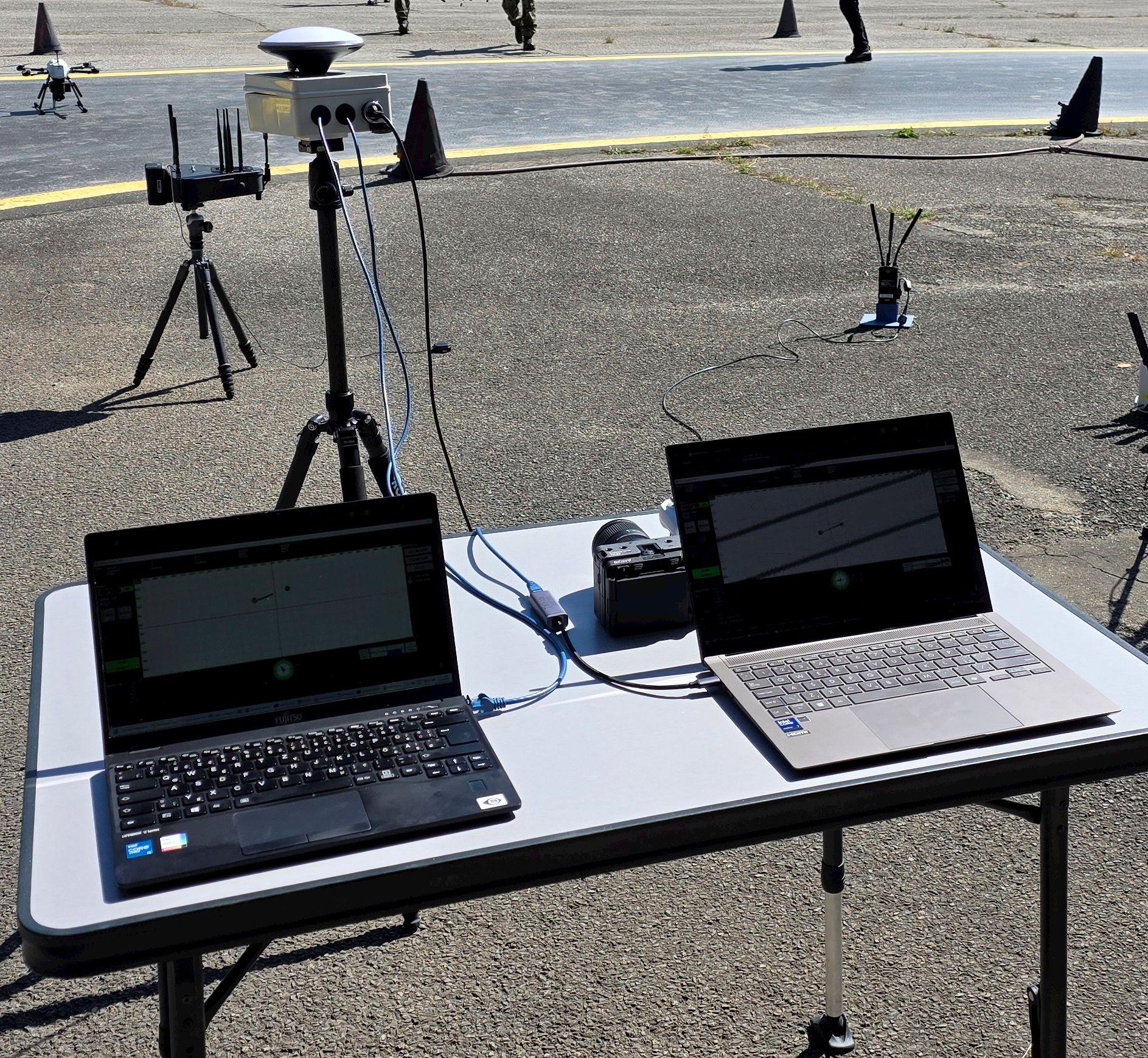
Scout-mini I & II test robots with RTK-GNSS during field experiments
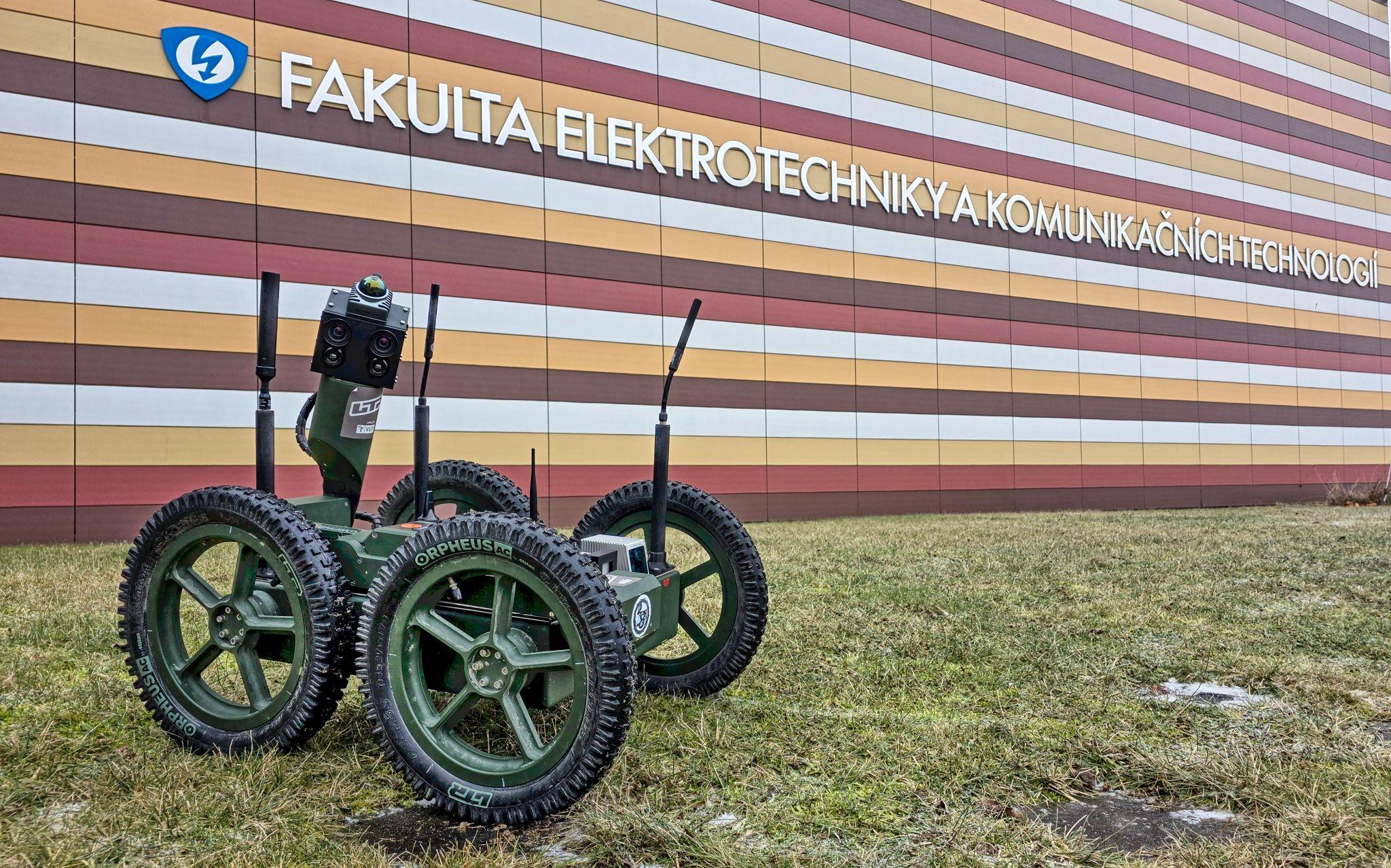
Orpheus-XR at VUT Brno — Faculty of Electrical Engineering
The Project
The Orpheus-AC3 is a CBRN (chemical, biological, radiological, nuclear) reconnaissance
robot deployed by the Czech Army. 40 units are in active service as part of the LOV-CBRN vehicle system,
delivered between 2021–2023. The goal of this project was to develop the next generation —
Orpheus-XR — with substantially improved optoelectronic and communication capabilities.
The project was funded by the Technology Agency of the Czech Republic (TAČR)
under Programme TREND, with a consortium of four partners:
LTR s.r.o. — lead partner, robot manufacturer
Brno University of Technology (VUT) — optoelectronics, sensor fusion, telepresence
T-Mobile Czech Republic — private 5G SA network, coverage mapping
GK SERVIS — communication subsystem development and integration
Multi-Path Communication Architecture
5G SA
Private + Public
MANET Mesh
Wave Relay
Satellite
Starlink + Inmarsat
SDR
Software-Defined Radio
Multi-Path Connectivity Controller
Auto-aggregation & failover between all layers
GK SERVIS’s Role: Communication Subsystem
GK SERVIS was responsible for Stage 5: Development and Integration of the Communication Subsystem.
The core challenge: a reconnaissance robot must maintain unbroken connectivity to its operator in environments
where no single communication technology is reliable — dense urban areas, underground spaces, forests,
disaster zones, and areas with intentional signal jamming.
We developed a Multi-Path Connectivity strategy that automatically aggregates and
switches between available communication layers based on real-time link quality assessment.
5G integration (private + public)
In partnership with T-Mobile, we optimized the system for operation on a private 5G SA (Standalone)
network in the n78 band. This provides ultra-low latency and high throughput for real-time
HD video streams and VR telepresence. When private coverage is unavailable, the system seamlessly
falls back to public 5G/LTE infrastructure.
We tested multiple 5G chipsets and found Qualcomm-based modules delivered approximately 2x
the throughput of SIMCom alternatives under identical radio conditions — critical for
streaming multi-camera feeds in real time.
MANET mesh network
For infrastructure-free operation (non-line-of-sight, deep forests, building interiors), we integrated
Persistent Systems MPU5 modules using Wave Relay technology. The robot acts as a mobile
relay node, dynamically extending network reach with each additional node in the field. The system
supports switching between civilian C-band and military L-band frequencies.
We also tested Doodle Labs mini-OEM Dual-Band Mesh Rider Radio modules for
additional mesh networking scenarios.
Satellite connectivity
For operations in complete “white spots” with zero terrestrial coverage, we tested two satellite solutions:
Starlink (LEO) — tens to hundreds of Mbps with sub-50ms latency. Enabled 4K video streaming from the robot in remote areas. Limited by line-of-sight requirements and brief dropouts near tall obstacles (compensated with buffering + MANET fallback).
Inmarsat Class 7 (GEO) — higher resilience to weather and broader geographic coverage. Used as a critical backup channel for telemetry, GPS coordinates, and emergency return commands when all other links fail.
Software-Defined Radio (SDR)
Unlike fixed-architecture modems, the SDR module can dynamically change frequency and modulation
type in real time. This is critical when standard bands (WiFi, 5G) are jammed or intentionally
blocked. The SDR also bridges communication with legacy analog systems and specialized sensors
that don’t support modern IP protocols.
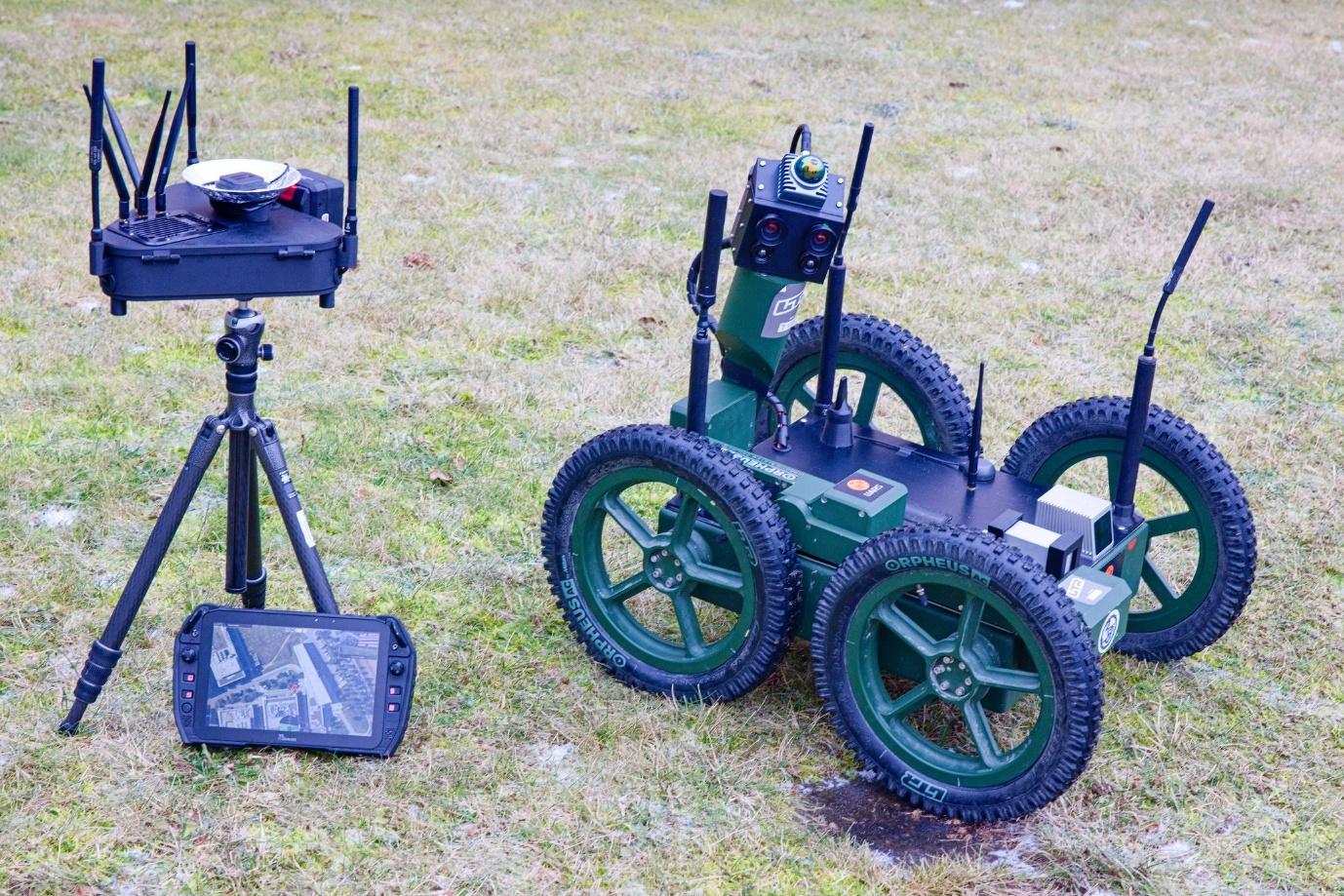
Operator station communication module
We designed and built a portable communication/retranslation module for the operator station, featuring
its own swappable battery, integrated RTK-GNSS receiver for precision positioning corrections, and
all communication interfaces needed to maintain the multi-path link with the robot.
Tech Stack
5G SA (n78 band)Qualcomm 5G modemsMANET / Wave RelayPersistent Systems MPU5Doodle Labs Mesh RiderStarlink LEOInmarsat GEOSDRRTK-GNSSPythonNVIDIA Jetson OrinFPGA
The Robot: Orpheus-XR
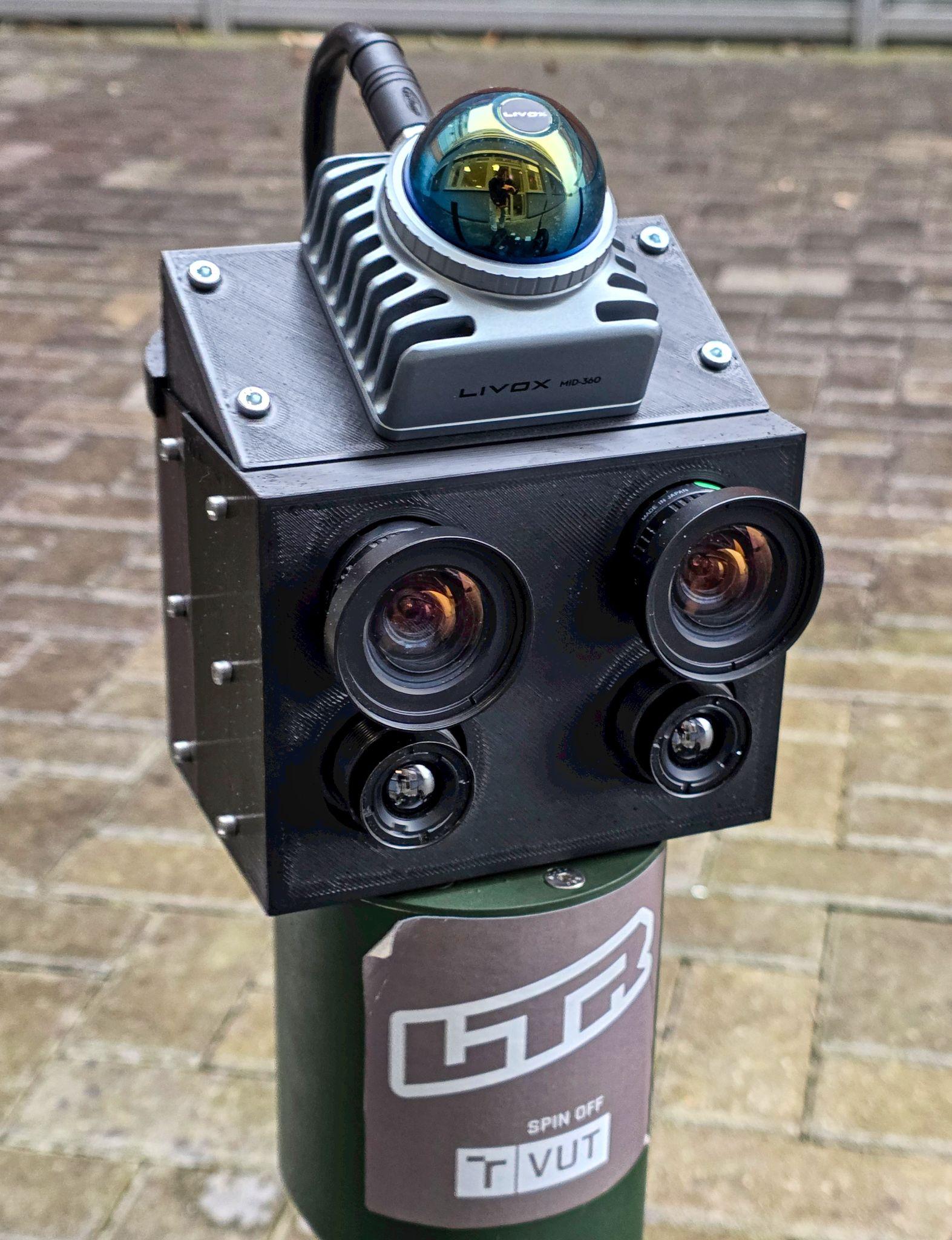
The Orpheus-XR carries a sensor head with 2 RGB cameras, 2 thermal cameras, and a 3D LiDAR
(Livox MID-360), all connected through a custom FPGA + Jetson Orin processing board.
The communication subsystem we built handles the enormous data throughput from these sensors —
streaming high-resolution video, thermal imagery, and 3D point clouds simultaneously to the operator.
The system includes adaptive transmission: when link quality degrades, it automatically
adjusts resolution, frame rate, and compression (JPEG, H.264, H.265) per sensor, or temporarily
disables individual sensors to free bandwidth. Latency is continuously monitored at every stage
of the pipeline — from capture to compression to wireless transmission to display.
Testing Methodology
Beyond the Orpheus-XR itself, the consortium built two additional test robots (Scout-mini I & II)
specifically for communication experiments. These robots run an autonomous waypoint-following system
(developed in Python) with RTK-GNSS precision, allowing repeatable outdoor communication
measurements across different configurations, times, and conditions.
The VUT campus area was equipped with 16 geodetically surveyed reference points and a rooftop RTK-GNSS
base station, creating a permanent outdoor testbed for radio transmission experiments.
Results
Unbroken connectivity across urban, indoor, underground, and open-field environments through automatic multi-path switching
4K video streaming from remote areas via Starlink with sub-50ms latency
Dynamic mesh extension — each robot in the field acts as a relay, extending range with every additional node
Adaptive bandwidth management — automatic sensor resolution/compression adjustment based on real-time link quality
Anti-jamming capability through SDR frequency hopping
Portable operator module with integrated RTK-GNSS and swappable battery for field deployment
Key Takeaway
In critical robotics applications — whether military reconnaissance, disaster response, or
industrial inspection — communication is the single point of failure. A robot that loses
its link to the operator is worse than useless; it’s a liability.
The multi-path architecture we developed eliminates this single point of failure. No single
technology is reliable everywhere, but the right combination of technologies, with intelligent
failover, can be. That’s what this project delivered.
Need Resilient Communication for Robotics or IoT?
We design multi-path communication systems for demanding environments. Government R&D, defense, industrial — let’s discuss your requirements.